


Coral Avery named a 2026 OSU Changemaker

By Becky Barrett
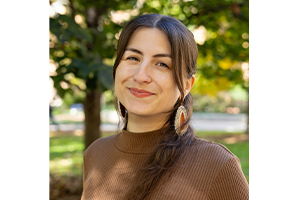
When Coral Avery speaks about climate action, people take notice. From their first job in conservation education at the San Diego Zoo Safari Park, to collaborating with notable scholars on national publications, to sowing seeds of sovereignty with the Shawnee Seed Sanctuary, Avery is bringing attention and understanding to the climate resilience movement.
When Avery was environmental coordinator at the Associated Students of Oregon State University, a professor heard them speak about climate action at a campus event.
“After the event, a professor I didn’t know sent me an email with a summer job opportunity,” they recall. The surprise introduction and recommendation to the Bureau of Indian Affairs (BIA) Pathways Internship program would lead to their current job as a climate planning specialist with the bureau.
Avery’s drive to bridge differences and nurture equitable environmental solutions are among the reasons they were chosen for OSU Changemakers. The program, a part of the OSU Days of Service, celebrates Beavers who meaningfully transform their communities or fields of interest through their careers or volunteer work. By nurturing growth toward strong communities, health and prosperity, and sustainable climate solutions, Avery underscores the profound impact that an individual’s efforts can have.
Through the internship, Avery worked as a forester at the Confederated Tribes of the Siletz. The role led to a bridge position as a tribal youth and climate liaison with both the BIA and the U.S. Geological Survey Northwest Climate Adaptation Science Center (NW CASC) in Corvallis and later Portland; providing scientific information, tools and techniques to regional resource managers and communities in Washington, Oregon and Idaho.
One meaningful project was providing NW CASC funding for the first Swinomish Tribe clam garden. Avery was invited to a community build day, amongst other project sponsors, Tribal members and community partners. When it came time to move rocks, Avery learned from Swinomish Elders that clam gardens are not only a good barrier for climate-intensified storm surge but that they are also a traditional food.
“I got to see how meaningful it was to them to bring back this traditional practice,” Avery recalls.
Avery, a citizen of the Shawnee Tribe, now lives in Ann Arbor, Michigan, where they recently earned a master’s in environmental justice from the University of Michigan School for Environment and Sustainability. In the program, Avery has furthered work with their own Tribe through a partnership with the Shawnee Seed Sanctuary and the Indigenous Collaborative Garden to grow more climate-resilient seedstock of Shawnee Three Sisters (corn, bean and squash) varieties.
Whether it’s close to home or around the globe, Avery’s voice continues to be heard. They lead workshops at the Native Youth Climate Adaptation Leadership Congress for high school students.
“It’s one of my favorite parts of my job,” they say. “Students get to have an amazing cultural connection and work on an environmental-based project.”
In November 2025, Avery attended the United Nations Climate Change Conference in Belém, Brazil, aimed at negotiating greenhouse gas reductions and strengthening climate action under the Paris Agreement and Kyoto Protocol. Understanding the geopolitical context allows Avery to see opportunities for collaboration.
“I heard about different approaches and where folks are finding momentum in different countries,” they said.
Avery’s work has also been recognized by People of the Interior and the National Wildlife Federation's LGBTQ+ Leaders in Conservation. They wish for these awards to highlight the role of Tribes and Indigenous Peoples in natural resource management.
"I find my work really meaningful and I’m grateful for all the connections,” they say. “I hope this spotlight might inspire others to consider getting involved."